




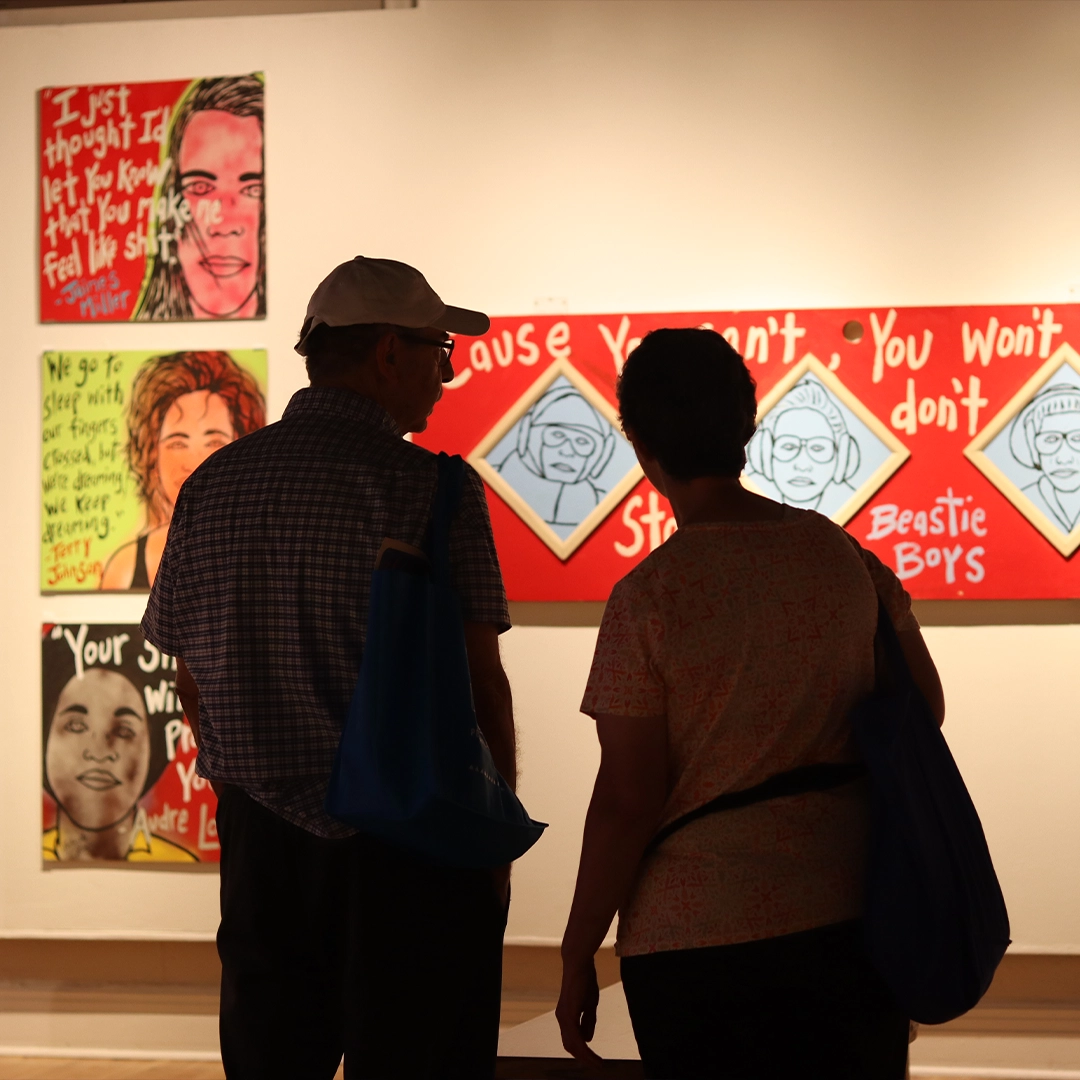
Curiosity is often where the best discoveries begin, and this year, the Pensacola Museum of Art is inviting festivalgoers to follow that curiosity in a different direction with Exploring the Wonder of STEAM, a multidisciplinary exhibition and series of events bringing art, science, technology, and environmental inquiry together under one roof.
Presented as part of the museum’s grant-funded Foo Foo Festival programming, Exploring Wonder runs November 4-7 with four days of exhibitions, artist talks, performances, panels, tours, and hands-on activities at the Pensacola Museum of Art. More than 10 artists will be featured across three galleries, with work that looks at ecosystems, environmental change, and the connections between human and non-human worlds. “We appreciate partnering and collaborating with other arts organizations, nonprofits, and others in the community to do something we normally wouldn’t be able to do,” says Nicholas Croghan, director of the Pensacola Museum of Art. “It’s a platform to do something exciting.”
At the center of the series is the idea of curiosity and wonder, and it’s focused on exhibition where artists, scientist, biologists, and other researchers can approach their work from a different perspective. “A lot of biologists and environmental scientists are displaying their research and peer-reviewed research, but the museum is giving them an opportunity to express their passions and how what they do affects all of us,” Croghan explains. “So with this event for Foo Foo Festival, we’re giving them all another way to share what they do with the public.”
The program begins with Boston-based artist Nathalie Miebach and her Weather Score Project, which transforms weather data into visual and musical compositions. She creates sculptures and installations using materials ranging from found objects to plastics, translating data from major weather events into intricate visual systems. One of her works, for example, interprets Hurricane Katrina through a color-coded aerial representation of the Gulf Coast, with elements such as wind speed and rising water represented through different visual markers. She then takes that data one step further, giving it to composers to translate into music. At the museum, Miebach will discuss her process before the Palafox Quartet, in collaboration with the Pensacola Symphony Orchestra, performs one of her works.
The series continues on Thursday with three exhibiting artists—Mary Bates Neubauer, Colleen Ludwig, and Pippin Frisbie-Calder—sharing their work through short-form artist talks. The museum is intentionally keeping the format quick and engaging, giving each artist an opportunity to tell the story behind their work and the ideas that drive it. The evening will close with Frisbie-Calder’s Simulated Extinction event, part of her installation Extinct, Threatened and Restored. Hand-printed paper birds will fill part of the gallery, creating an immersive installation that changes as visitors participate. Using magnetic poles, guests can “hunt” one of the birds and take it home, gradually transforming the exhibition as birds disappear.
Friday will bring two panel discussions featuring STEAM 2026 artists, researchers, and educators, followed by a community party. The participants represent a range of disciplines and backgrounds, including artists traveling from Boston, New Orleans, and Phoenix alongside local artists, University of West Florida faculty, and researchers connected to the Institute for Human & Machine Cognition.
The museum’s programming continues with free exhibition tours on Wednesday, Thursday, and Friday, giving visitors an opportunity to explore the STEAM exhibitions with additional context. Then on Saturday, the museum will open its doors for a free STEAM Day from 10am until 4pm. Families and visitors of all ages can experience the exhibition, participate in hands-on activities, and take part in additional programming.
Two ticketed workshops for adults and teens will also offer a deeper, more hands-on experience. Colleen Ludwig will lead Bee-ing & Bee-coming Insect: Playful Connections with the Urban Wild, an exploration of insects, observation, and urban ecosystems. Later that afternoon, Pippin Frisbie-Calder will lead Nature Printing, where participants can use leaves, flowers and other natural materials to create prints on paper and fabric. No previous art experience is required for either workshop, and that accessibility is intentional, Croghan says. “We have a catchphrase that we are more than a museum,” he says. “Most of our exhibitions we try to supplement with community programming, free events, and other ways of engaging or trying to engage with different learning styles.”
The Foo Foo Festival grant allows that philosophy to expand considerably this year. Without the additional support, Croghan says, STEAM 2026 likely would have remained primarily an exhibition with perhaps a few artist talks. “We’re excited for the opportunity to expand how people feel about art museums,” he says. “It’s going to be a really exciting environment and a great opportunity for people to see that you don’t have to be an expert to enjoy it while also having an experience that encourages you to make connections and discover something that maybe you didn’t expect.”